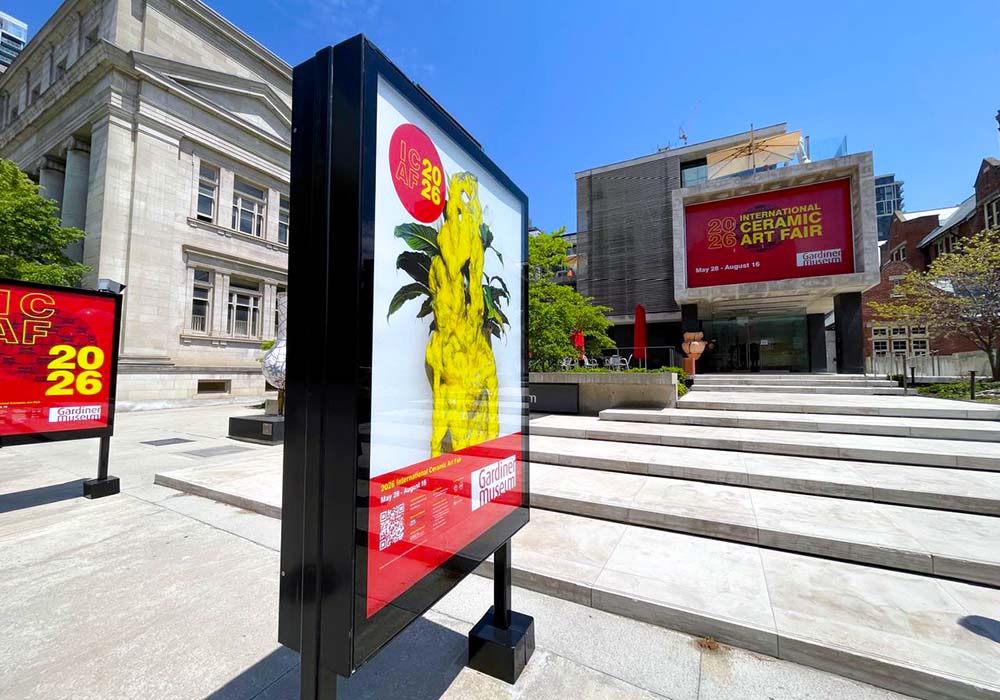
Yesterday, I attended the media preview for the Gardiner Museum's International Ceramic Art Fair (ICAF) 2026 in Toronto. Themed "The City and the Commons," the biennial exhibition runs from May 28 to August 16 and brings together Canadian and international ceramic artists exploring urban life, shared spaces and personal sanctuary. I also spoke with two curators who made me rethink everything I thought I knew about clay.
I'll be honest: when the invitation landed in my inbox for a media preview at the Gardiner Museum, I wasn't entirely sure what to expect. I've always appreciated ceramics in the way most people do — admiring a well-thrown bowl, registering the craftsmanship, then moving on. What I didn't anticipate was that a Wednesday afternoon in a Toronto museum would fundamentally shift how I think about clay as a medium, about cities as living organisms, and about the quiet, persistent ways humans have always used their hands to make sense of the world around them. The Gardiner Museum's International Ceramic Art Fair (ICAF 2026) opened its doors to the media yesterday, and I was there for the first look.
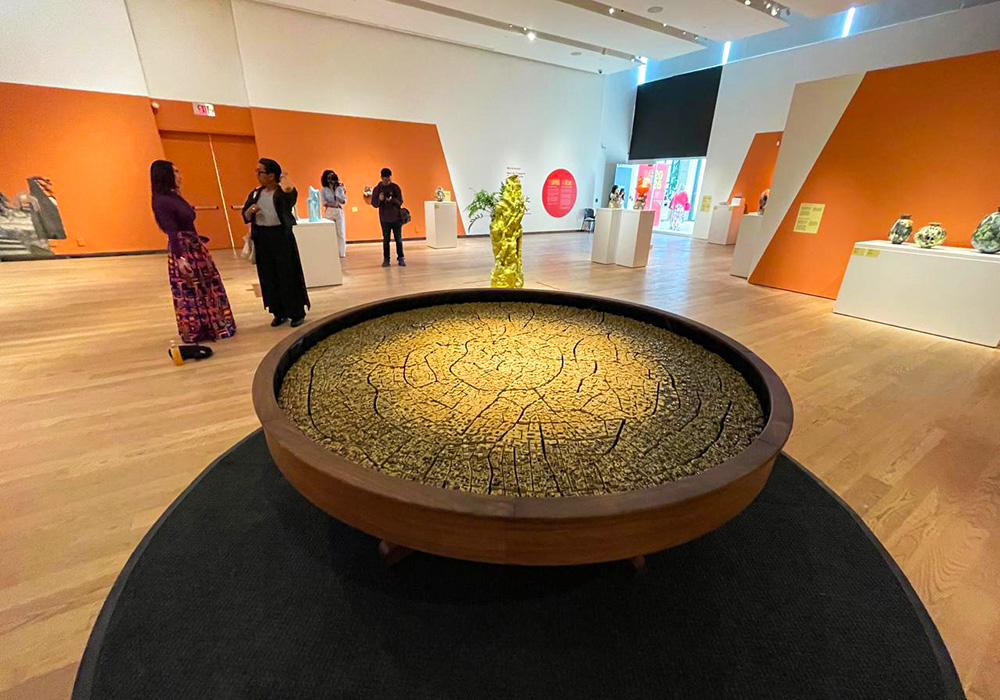
ICAF is a biennial celebration of contemporary ceramics, and this year's edition runs from May 28 to August 16, 2026, at the Gardiner Museum, 111 Queens Park, Toronto. The theme for this year is "The City and the Commons" — a concept that, once explained, feels almost obvious in its elegance. The fair brings together leading Canadian and international ceramic artists whose work probes what it means to share space, build community and carve out personal sanctuary within the urban landscape.
Several pieces are interactive. The works respond to the presence of visitors, which, if you think about it, is a remarkably apt metaphor for city life itself.
A conversation with Dr. Sequoia Miller
One of the highlights of the preview was my interview with Dr. Sequoia Miller, Chief Curator and Deputy Director at the Gardiner Museum. He's the kind of person who can reframe an entire medium in the space of a few sentences, and he does it with a warmth that makes you lean in rather than tune out.
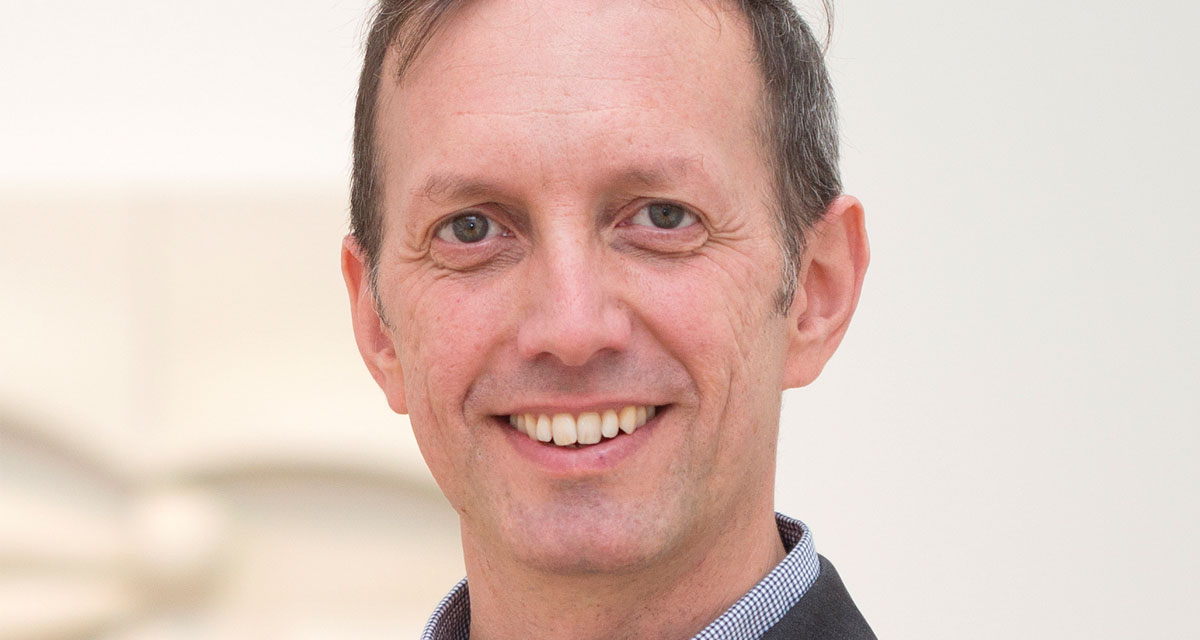
He explained that the exhibition grew from observing how contemporary artists were reaching for clay when they wanted to ask hard questions about urban existence:
- Who gets to access shared spaces in a city?
- When and how are those spaces made available?
- How do we create personal environments of sustenance within the larger, often indifferent urban fabric?
These aren't small questions. And the fact that ceramic artists are using kilns and clay to wrestle with them says something important about the medium's expressive range.
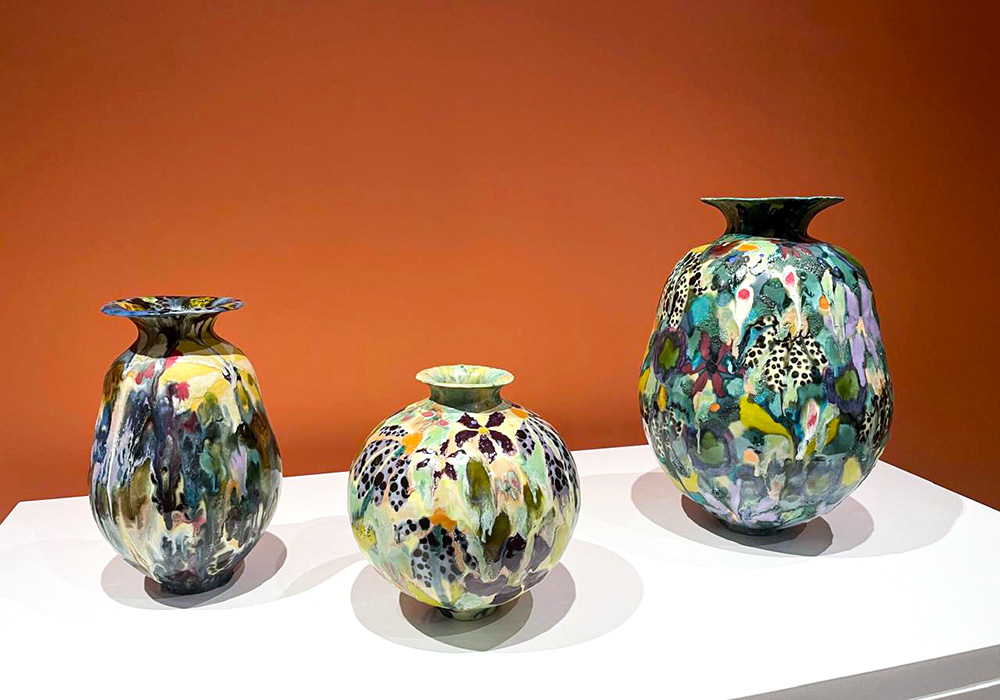
What struck me most was Dr. Miller's point about the universality of ceramics. "Ceramic art is fundamentally human," he told me. It speaks to the experience of being human in a way that very few mediums can claim, because it's embedded in daily life across every culture, every era and every corner of the world. From ancient vessels in the Middle East to contemporary installations in Toronto, clay has always been there.
Even as we spoke, with the doors barely open, visiting media were already finding their footing, gravitating toward pieces that resonated and discovering what Dr. Miller called their "favourite little moments." That kind of immediate, personal connection is rare in a gallery setting. It felt less like an exhibition and more like an ongoing conversation.
A conversation with Franchesca Hebert-Spence
The second interview of the afternoon was equally compelling. I spoke with Franchesca Hebert-Spence, the Gardiner Museum's inaugural Curator of Indigenous Ceramics, a title that itself signals something meaningful about where the institution is placing its attention.
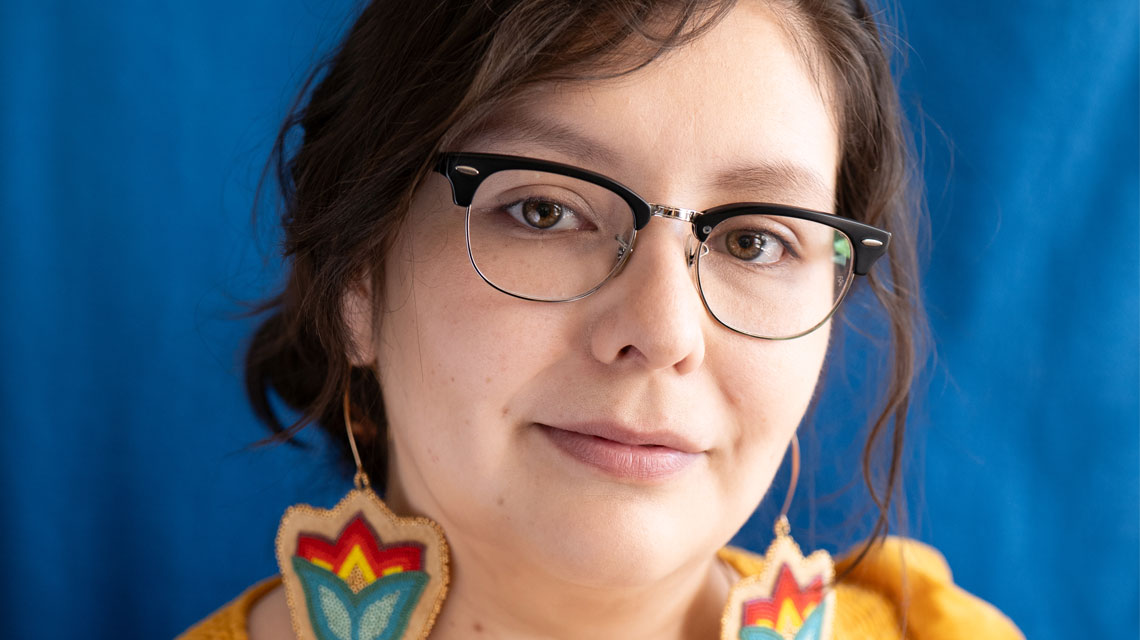
Franchesca is Anishinaabe from Sagkeeng First Nation, and she spoke with the kind of grounded authority that comes from both personal connection and deep curatorial knowledge. She was quick to point out that the world of Indigenous ceramics in Canada is vibrant and evolving, even if it doesn't always get the visibility it deserves.
One of the more practical and revealing things she shared was about access. Clay is a demanding material. It requires studio space, kiln access and time. For many Indigenous artists whose practices are already multidisciplinary, ceramics can feel like a detour rather than a destination, simply because the necessary infrastructure isn't always in place. That context matters because it reframes what it means for an artist to commit to ceramics as a primary medium.
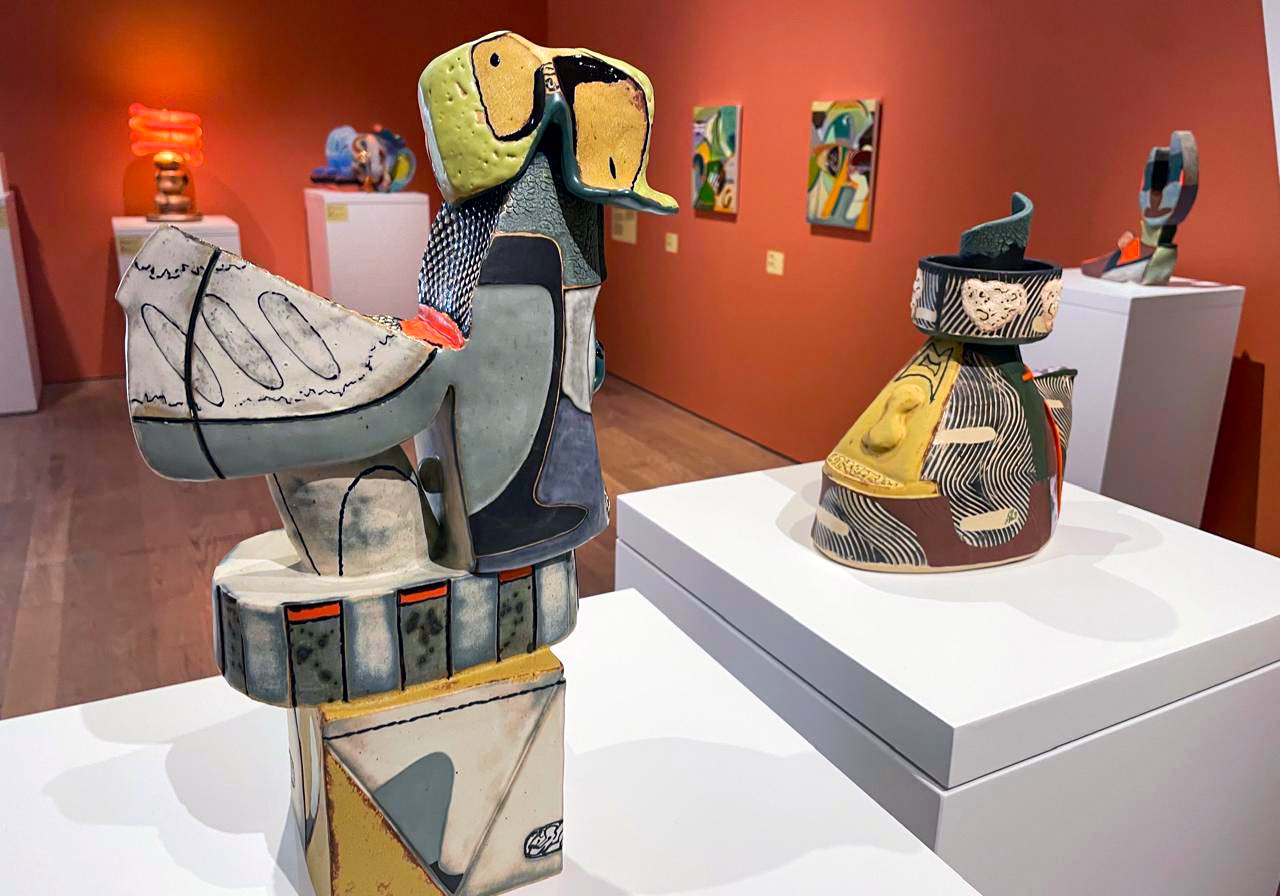
The exhibition features several Indigenous artists for whom clay is exactly that, a central practice rather than an occasional one. Two names to know:
- Christine Sandoval, whose work engages with land, identity and cultural memory
- Jaimie Isaac and Suzanne Morrissette, co-directors of the Rosemary Gallery, who bring a collaborative, community-rooted perspective to their ceramics
Franchesca described the Indigenous works in the exhibition as operating on multiple layers simultaneously, addressing questions of land and land theft, social practice and healing and pushing what ceramic art as a form can actually do. Technology is part of the picture too, which makes the work feel urgent rather than nostalgic.
Her framing of "matriarchate," a term she used thoughtfully as a counterpoint to concepts of land theft, was particularly significant. It suggests not just reclaiming space but reorienting the relationship to it entirely. That's a lot to carry in a ceramic piece. And yet the work does it.
Why Toronto, and why now?
It's worth asking why a city like Toronto is the right place for an international ceramics fair of this scale. The answer, I think, has something to do with the city's particular composition: its layers of immigrant culture, its Indigenous history, its ongoing negotiation of what public space means and who it belongs to. ICAF doesn't just happen to be in Toronto; it seems to be in conversation with the city itself.
The fair runs for twelve weeks, which is a serious commitment of time and attention. That's not a weekend pop-up. It's an invitation to return, to sit with the work, to let your understanding of it develop.
Worth your time
If you have any interest in contemporary art, urban culture, Indigenous perspectives or simply in things made by human hands with intention and skill, ICAF 2026 is worth the trip to Queens Park. The exhibition runs until August 16, which gives you the summer to find your way there.
My afternoon at the preview reminded me of something I already knew but occasionally forget: The best art doesn't just ask you to look. It asks you to think about where you live, how you share space and what you leave behind. As it turns out, clay has been doing that work for millennia. It's just that not all of us were paying attention.
The Gardiner Museum clearly is, and if yesterday's preview was any indication, so will their audiences this summer.
The Gardiner Museum's International Ceramic Art Fair 2026 runs from May 28 to August 16 at 111 Queens Park, Toronto. Admission details and programming information are available at gardinermuseum.on.ca.