
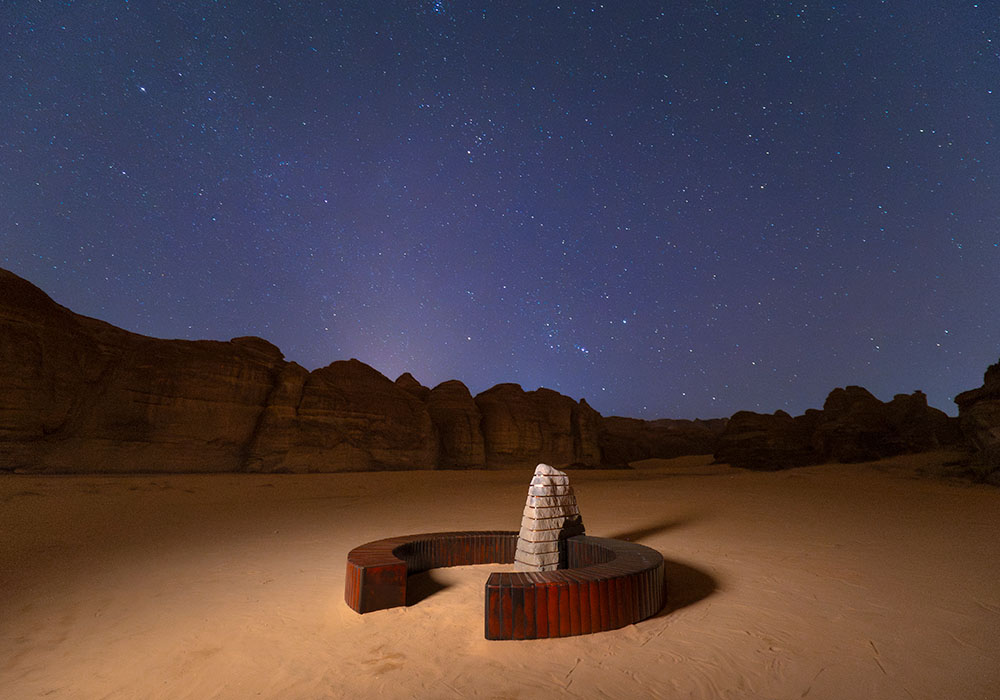
AlUla is bringing its design residencies to the heart of Paris this September, and I'm here for it. Life of Forms opens at Lafayette Anticipations during Paris Design Week, pairing works by AlUla-based designers with pieces from the Fonds de dotation Famille Moulin collection. It's the opening act of a bigger AlUla Cultural Season in Paris, and it says a lot about where Saudi design is headed.
I spent 14 years living and working in Saudi Arabia, including time in the arts sector, so AlUla is not an abstraction to me. I first visited back in 2013, long before Wadi AlFann, Desert X AlUla, or any of the tourism infrastructure that now gets photographed for glossy travel features. Back then, the site was still mostly known as Mada'in Saleh, tied to its ancient rock-cut tombs rather than to AlUla (which mainly referred to the ancient traditional town) as a destination brand. There were only two modest hotels nearby, Madain Saleh Hotel and ARAC Hotel, and both needed to be booked weeks in advance. Getting in required special permission from the Saudi Commission for Tourism and Antiquities, arranged well before we ever set foot on site.
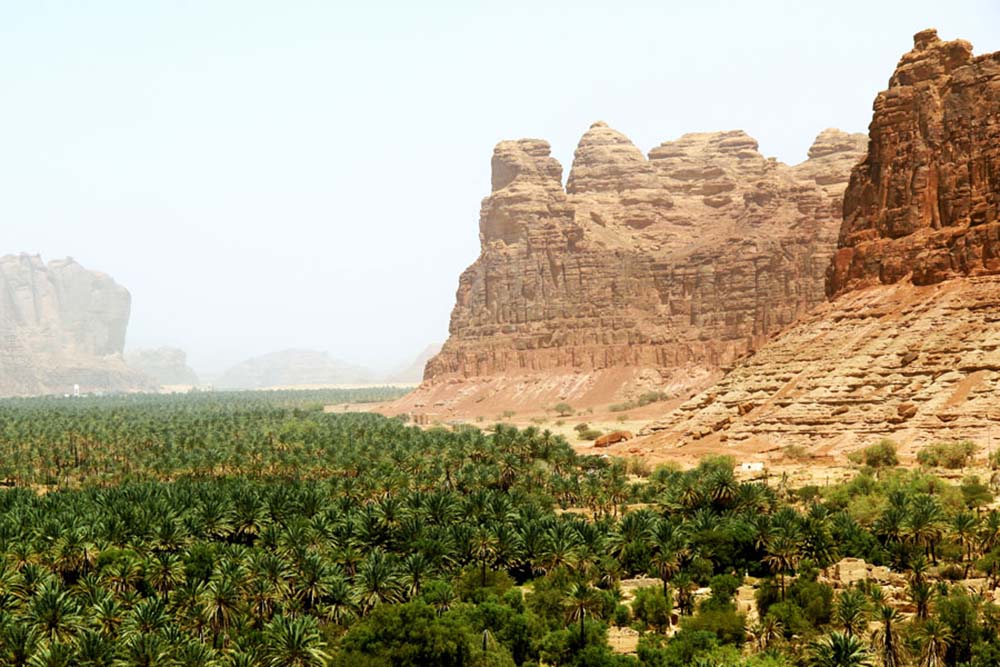
It was a place of quiet rock formations and archaeological sites that hadn't yet been positioned as a global cultural destination. That changed with the establishment of the Royal Commission for AlUla in 2017, when the whole area was consolidated and rebranded under the AlUla name.
Watching that same region show up in Paris this September, inside one of the city's most architecturally striking art institutions, is the kind of full-circle moment that makes me want to write rather than just scroll past the news.
So when I received the press pitch that AlUla is heading to Lafayette Anticipations with its own exhibition, I felt compelled to dig into that story. This isn't a one-off pop-up or a marketing stunt timed to a design fair. It's the first public chapter of something AlUla has clearly been building for a while: a real, sustained cultural exchange with France, anchored in actual studio practice rather than polished brochures.
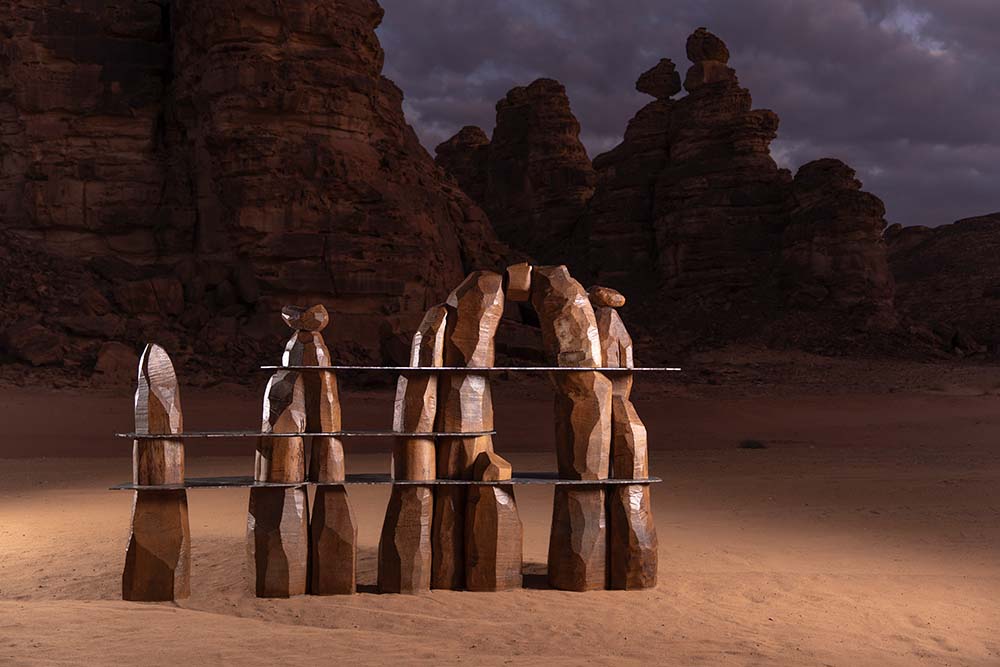
The exhibition, called Life of Forms, opens at Lafayette Anticipations from September 8 to 13, 2026, right in the middle of Paris Design Week. It's a joint production between Lafayette Anticipations, Arts AlUla, Design Space AlUla, the French Agency for AlUla Development (AFALULA) and Villa Hegra. If that list of names feels long, that's kind of the point. This is what institutional collaboration actually looks like when it's done properly: several organizations with different mandates, all pulling toward one show.
What Life of Forms is actually about
The premise starts with a line most design students hear early on: Louis Sullivan's "form follows function." Life of Forms takes that idea and pushes past it, looking instead at the feedback loop between imagination and lived reality. In plain terms, the show is interested in objects that carry memory, that come from craft traditions rather than factories, and that stay in dialogue with the people and places that made them.
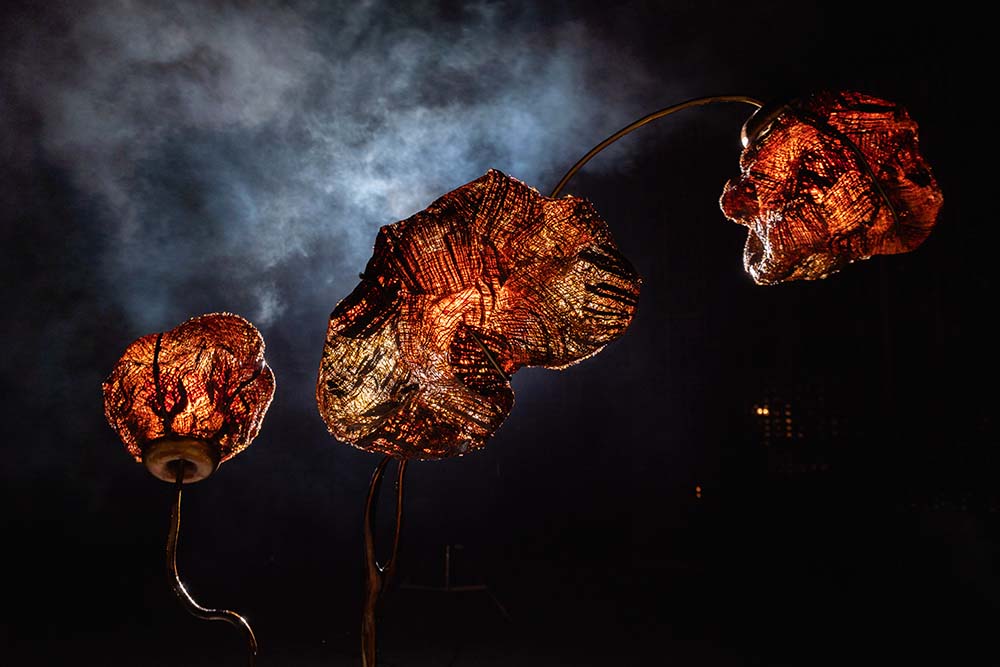
Some of the works reconnect with practices that have long been alive in the AlUla region, such as palm weaving, mud-brick construction, perfumery and stone-working. Others take a more industrial starting point and bend it toward something more human, more improvised, more alive.
Curatorially, this comes from a genuinely cross-cultural team: Clément Delépine, Director of Lafayette Anticipations, Arnaud Morand of AFALULA, Ali Alghazzawi from the Royal Commission for AlUla, and Emily Marant, Senior Design Advisor at AFALULA and founder of Studio Marant. Delépine and Morand described the exhibition as offering "a landscape of situations: spaces to inhabit, materials to handle, environments to perceive, and systems of production to traverse." That framing tells me this won't be a show where you walk past objects on plinths. It sounds more like something you're meant to move through.
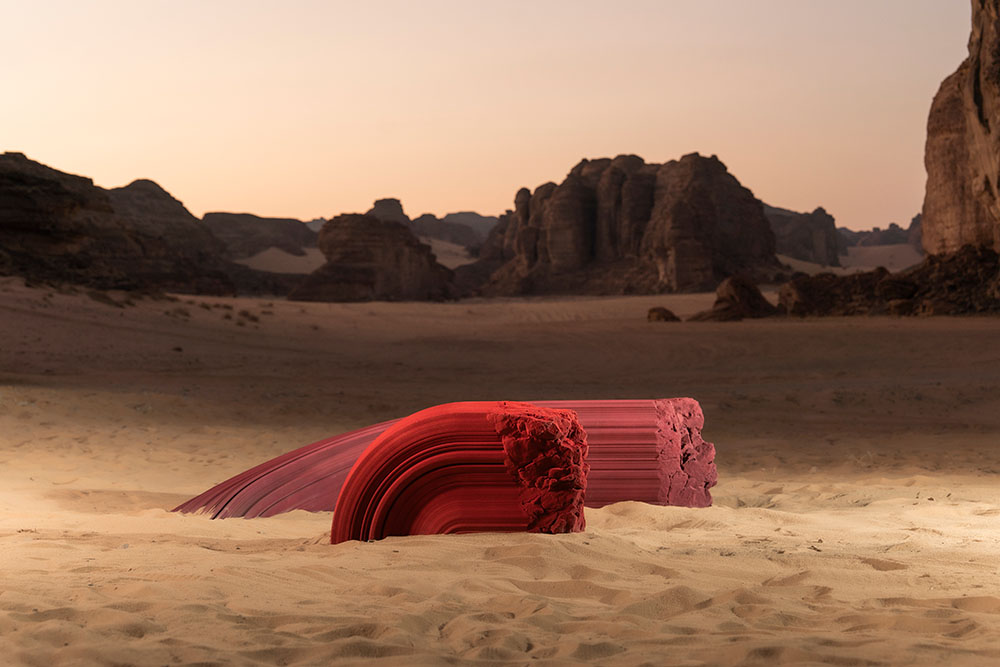
The AlUla side of the pairing
The designers featured come out of AlUla's residency programmes, based in the AlJadidah Arts District and the Madrasat Addeera craft school. Each one is working through a distinct set of questions:
- Altin Studio, focused on vernacular intelligence, palm ecosystems and sa'af weaving as collective authorship
- Aseel Alamoudi, treating design as civic and social infrastructure
- Bahraini Danish, working through spatial narrative and cultural translation
- Paul Ledron, drawing on Hejazi perfumery traditions, bakhoor and oud to design the atmosphere itself
- Paul-Émilieu Marchesseau, whose pieces come out of a residency at Villa Hegra and treat design as cultural mediation
- Ori Orisun Merhav, working in post-human and multispecies design
- Raw Material, approaching design as material inquiry and ecological system
- Studio ThusThat, known for critical material practice
That's a wide spread of practices for one show, but it maps well onto AlUla's own pitch: a place where landscape, craft and contemporary design sit side by side rather than in separate lanes.
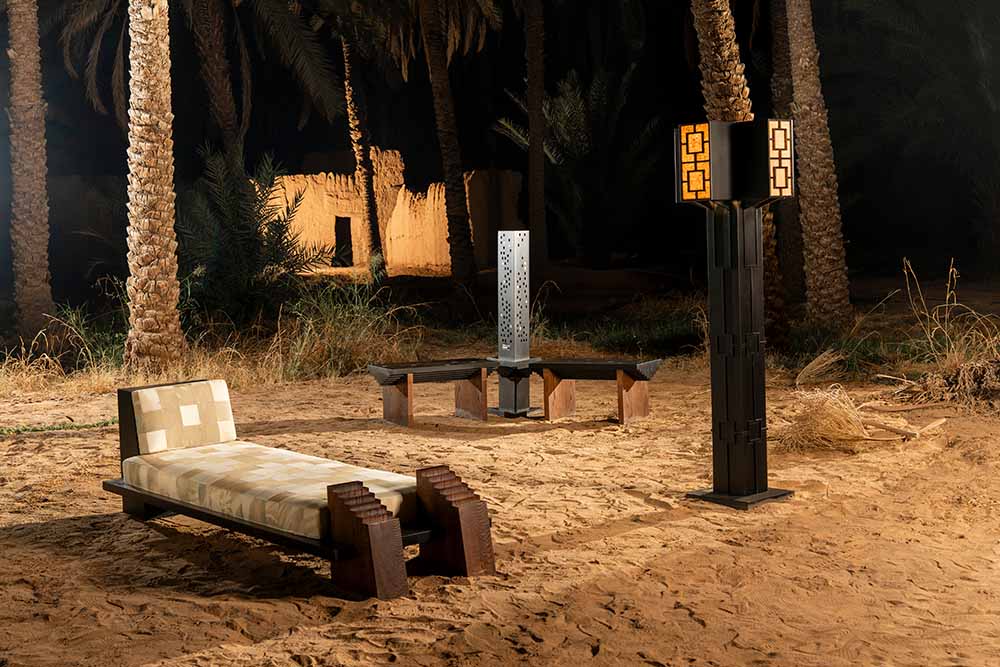
A dialogue with a major French collection
On the other side of the pairing sits a selection from the Collection Lafayette Anticipations, held by the Fonds de dotation Famille Moulin, which now runs to more than 400 works, largely by emerging artists. Pieces by Xavier Antin, Meriem Bennani, Camille Blatrix, Katinka Bock, Etienne Bossut, Eve Chabanon, Gaëlle Choisne, Raphaël Emine, Matthew Angelo Harrison, Mathieu Mercier, Lydia Ourahmane and Markus Schinwald will sit in conversation with the AlUla works.
The theoretical scaffolding here draws on anthropologist Tim Ingold's writing on the maker's relationship to materials and on Jane Bennett's idea of "vibrant matter," the notion that objects aren't inert but are shaped by histories, relations and conditions well beyond their physical form. Marcel Duchamp's concept of the "infra-thin" gets a nod too, which tracks: This is a show more interested in what sits between things than in the things themselves.
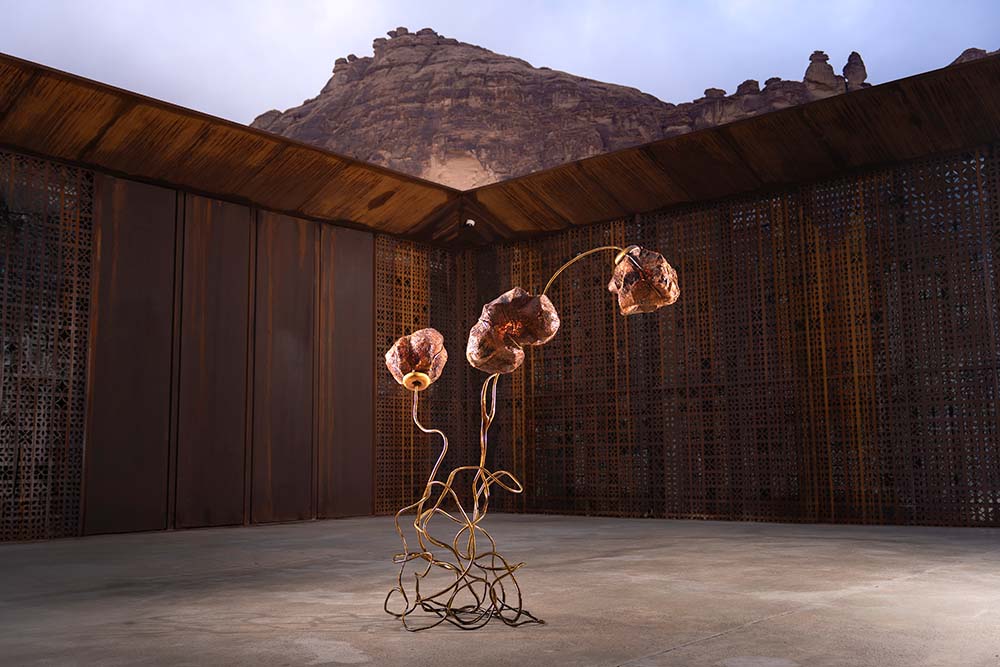
Why Lafayette Anticipations makes sense as the host
Lafayette Anticipations isn't a neutral white cube. Since it opened in 2018 inside a building reworked by Rem Koolhaas, complete with movable floors, the institution has treated production and exhibition as inseparable, with research and making embedded right into the architecture. Hamad AlHomiedan, Director of Arts and Creative Industries at the Royal Commission for AlUla, put the pairing this way: "The exhibition reflects the growing reach and strength of AlUla as a design hub and the Arts AlUla ecosystem on the international stage."
I'd add that pairing a purpose-built production space with a region whose whole identity is built around layered civilizations and continuous craft transmission is a smart curatorial move on paper. Whether it lands will come down to execution, and I'll be curious to see how it plays out once the show is actually up.
The bigger picture: AlUla's Cultural Season in Paris
Life of Forms is the opener, not the whole story. It kicks off a wider AlUla Cultural Season in Paris, running through September and October, built around Saudi-French cultural cooperation.
| Event | Platform | Timing |
|---|---|---|
| Life of Forms | Lafayette Anticipations | September 8 to 13, 2026 |
| AlUla design initiatives | Institut du monde arabe (IMA) Design Prize | September to October 2026 |
| Ayman Zedani installation | AlUla Contemporary Art Museum, during Art Basel Paris week | September to October 2026 |
| Villa Hegra participation | Asia Now | September to October 2026 |
Taken together, this positions AlUla less as a single destination and more as a recurring presence on the international art and design calendar. That's a different ambition than a one-time museum show, and it's the part of this story I find most interesting.
Where I land on all this
What strikes me most about Life of Forms is how deliberately it avoids the easy version of this kind of exhibition, the one where a region's heritage gets flattened into a few decorative motifs and shipped abroad for a photo opportunity. Instead, this show leans into process: residencies, craft schools, material research, and a genuine curatorial partnership rather than a borrowed gallery wall. AlUla has spent years building an ecosystem around Wadi AlFann, Desert X AlUla, Madrasat Addeera and its archaeological sites at Hegra and Dadan, and Life of Forms reads like the first time that ecosystem is being presented abroad as a coherent body of work rather than a collection of headlines.
I'll be watching how the rest of the Cultural Season unfolds, particularly the Ayman Zedani installation during Art Basel Paris and the IMA Design Prize showing, since both will say a lot about whether this is a sustained cultural strategy or a single well-timed moment. Either way, it's worth keeping an eye on if you're as curious as I am about where Middle Eastern design is headed next, and I suspect this won't be the last time AlUla shows up in this space.
Event details
- Exhibition: Life of Forms
- Dates: September 8 to 13, 2026
- Press preview: Monday, September 7, 2026
- Location: Lafayette Anticipations, 9 rue du Plâtre, Paris 4th
- Admission: Free
- Organized by: Lafayette Anticipations, Arts AlUla, Design Space AlUla, AFALULA and Villa Hegra