

Commercial carpets are replaced far more frequently than most structural materials, yet they rarely feature in sustainability conversations. A new generation of recyclable carpet systems is challenging that oversight. Designed for disassembly, material recovery, and lower lifecycle emissions, these innovations signal a broader shift in how the built environment approaches circularity. Sometimes the most meaningful sustainability breakthroughs are hiding in plain sight.
When we talk about decarbonizing construction, the conversation typically gravitates toward concrete, steel, and mass timber. Structural materials dominate the narrative. Yet the reality of commercial real estate tells a different story. Interior finishes, particularly flooring, are replaced far more frequently than structural components. Their cumulative environmental impact is significant.
Carpet is one of the most ubiquitous materials in commercial interiors. Airports, hotels, office towers, conference centres, hospitals. It absorbs sound, defines spatial identity, and contributes to occupant comfort. At the same time, it represents a persistent waste challenge.
Commercial carpet tiles are often replaced every five to seven years. Most of them end up in a landfill. The issue is not only volume, but composition. Traditional carpets consist of multiple bonded layers: synthetic fibres, polymer backings, fillers, and adhesives. Once fused together, these materials become difficult and costly to separate.
The prevailing model has long been linear. Install. Use. Remove. Dispose.
That model is now being questioned.
A return to materials science
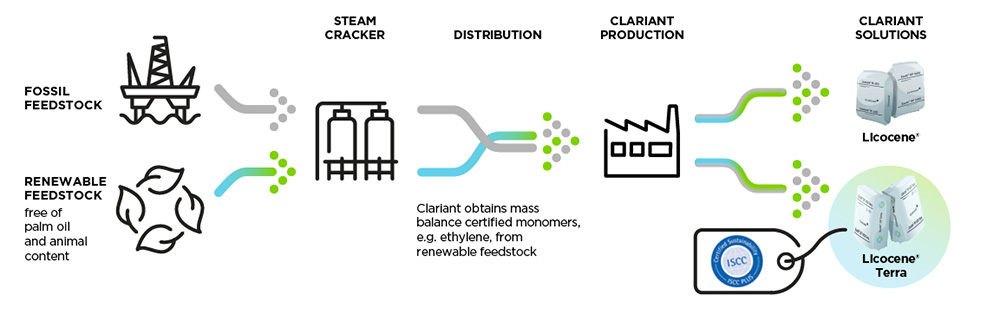
Several years ago, I worked on copywriting campaigns for Clariant, translating complex additive technologies into accessible narratives. Revisiting the company’s recent work in sustainable additives and recyclable systems has been an interesting exercise. What once felt like product innovation now reads as part of a broader systemic shift.
Recyclable carpet systems are built around a different premise: materials should be recoverable at end of life.
Instead of permanently bonding incompatible polymers, manufacturers are increasingly engineering carpets using compatible or mono-material constructions. Backing systems are designed to separate cleanly. Additives enhance performance while preserving recyclability. Take-back programs are integrated into supply chains.
This design philosophy changes the equation.
Key elements shaping this transition include:
-
Polymer compatibility
Selecting chemically aligned materials simplifies recycling streams and reduces contamination risk. -
Modular tile architecture
Individual tiles can be replaced without removing entire floor installations, extending overall lifespan. -
Separable backing technologies
Backings engineered for recovery allow fibres and substrates to re-enter material cycles. -
Closed-loop logistics systems
Manufacturer-led collection and reprocessing programs reduce reliance on landfills.
Each component addresses a specific failure point in traditional flooring systems.
Why interiors matter more than we admit
Corporate interiors are in constant flux. Tenant turnover, brand refreshes, hybrid workplace redesigns, hospitality upgrades. Flooring often becomes collateral damage in the evolution of aesthetics.
The embodied carbon of these cycles accumulates quietly. Across large property portfolios, interior renovations represent recurring material extraction and disposal. For companies reporting on Scope 3 emissions, these decisions increasingly carry weight.
Recyclable carpet systems introduce measurable advantages:
- Reduced demand for virgin raw materials
- Lower lifecycle greenhouse gas emissions
- Decreased landfill contributions
- Improved alignment with ESG frameworks and sustainability reporting
These benefits are not theoretical. They are quantifiable within lifecycle assessments and Environmental Product Declarations.
The strategic implication is clear. Flooring is no longer a purely aesthetic decision. It intersects with procurement policy, sustainability metrics, and corporate accountability.
Performance remains non-negotiable
Sustainability alone does not drive adoption in commercial markets. Flooring must withstand high foot traffic, meet fire safety standards, resist staining, and maintain acoustic performance.
Advances in polymer chemistry and additive technologies have enabled recyclable fibres to achieve durability ratings comparable to conventional carpets. This is where material science becomes critical. Circularity cannot compromise performance.
The real innovation lies in aligning mechanical resilience with end-of-life recoverability. When durability and recyclability coexist, the business case strengthens alongside the environmental one.
Circular thinking at system scale
The construction sector is undergoing structural recalibration. Developers, architects, and procurement teams are increasingly evaluating materials through a lifecycle lens. Steel and concrete dominate headlines, yet interior materials represent repeated cycles of extraction and disposal.
Carpet, because it is frequently replaced, presents an opportunity for outsized impact.
Forward-looking developers now specify materials that include:
- Documented recyclability pathways
- Verified recycled content
- Transparent lifecycle data
- Clear end-of-life logistics
These criteria are becoming embedded in procurement frameworks rather than appended as optional sustainability features.
That evolution signals maturity.
What this shift really represents
Recyclable carpets may not appear revolutionary at first glance. They do not reshape skylines or alter structural engineering. Yet they represent something more subtle and arguably more profound.
They reflect a mindset shift.
Designing for disassembly requires foresight. It requires manufacturers to assume responsibility beyond the point of sale. It requires architects and facility managers to view materials as temporary stewards within a broader resource loop.
The built environment is gradually moving from extraction to regeneration. That transition will not be driven solely by headline-grabbing megaprojects. It will also be shaped by everyday materials reconsidered through a circular lens.
Sometimes the most telling indicators of systemic change are not the tallest towers or the boldest master plans. They are the quiet decisions embedded in specification sheets.
And occasionally, they are right beneath our feet.